

You slam on the brakes and suddenly, they don't feel right. Longer stopping distance. Mushy pedal. Panic rising.
Welcome to brake fade and if you don't understand it, it can ruin your drive or worse.
Let's break down exactly what causes brake fade and how to prevent it in simple, real-world terms you can actually use.
What Exactly Is Brake Fade?
Brake fade happens when your brakes overheat during repeated or intense use, causing a temporary but dangerous loss of braking power.
When you hit the brakes, you're converting motion energy into heat through friction between your brake pads and rotors. But if too much heat builds up faster than the system can shed it leading to negative experience:
-
The brake pads start to outgas (release gases) and lose grip on the rotor surface.
-
The rotor surface gets so hot it can't create effective friction.
-
In extreme cases, brake fluid can boil, making the pedal feel soft or completely useless.
Result: You press harder and stop slower.
3 Main Types of Brake Fade
Pad Fade (Most Common):
-
Caused by brake pad material overheating and losing friction.
-
Typical in aggressive driving, track days, or towing heavy loads downhill
Fluid Fade (Dangerous):
-
Caused by brake fluid boiling due to extreme system heat.
-
Creates air bubbles in brake lines, making the pedal feel spongy or completely unresponsive.
Green Fade (New Brake Pads Only):
-
Happens during the first few hard stops after installing brand-new brake pads when resins in the material are still curing.
-
If brake pads aren't properly bedded in, they can outgas badly under pressure.
How to Prevent Brake Fade in the Real World
Choose the Right Brake Kit for Your Driving Style
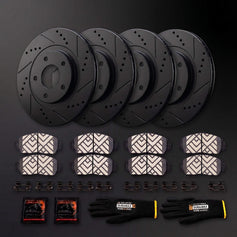
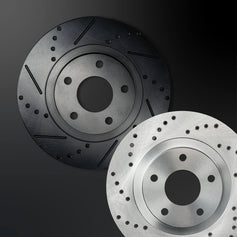
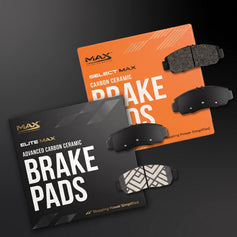
- Max Advanced Brakes' PerformanceMax Series featuring drilled and slotted rotors and EliteMax carbon ceramic brake pads dissipates heat faster and resists fade better than standard setups.
- ComfortMax and ValueMax are excellent for everyday driving, but high-demand drivers should upgrade to handle the extra heat.
Proper Bedding-In of New Brake Pads and Rotors
- Fresh brake pads and rotors need to be gradually heat-cycled to create an optimal transfer layer.
- Follow Max Advanced Brakes' official Break-In Procedure included with every brake kit.
Don't Ride the Brakes
Especially during towing, mountain driving, or aggressive downhill runs. Use engine braking when possible to reduce the load on your brakes and rotors.
Flush Brake Fluid Regularly
- Brake fluid absorbs moisture over time, lowering its boiling point.
- Bleed and replace fluid every 1–2 years or more often if you drive aggressively or tow frequently.
Understand Your Limits
Even the best brake parts can't defy physics forever. Give your system time to cool down during heavy use. Short bursts of braking, not constant pressure.
Final Thought: Heat Happens — Smart Drivers Manage It
You can't avoid heat. Though with the right brake kit, smart driving habits, and regular maintenance, you can control it and stay confident every mile.
Check out Max Advanced Brakes reviews to see how real drivers rate their brakes and rotors under high-heat, high-demand conditions. Stay cool. Brake smarter. Drive MAX.