

By: Max Advanced Brakes
Every Winter, Canadian Roads Get Coated in Salt — And So Do Your Brakes
Canada spreads between 5 and 7 million tonnes of road salt every winter. Ontario alone applied 1.68 million tonnes in the 2023–2024 season, with Quebec close behind at roughly 1.5 million tonnes.
All that salt doesn't just make your car look grimy. It chemically attacks every exposed metal surface on your brake system, from rotors and calipers to the steel brake lines running along your undercarriage.
The three biggest threats are rotor corrosion, caliper seizure, and brake line failure. These are not cosmetic problems. They are safety issues that can compromise your stopping power without warning.
The Science: Why Salt Attacks Brake Metal So Aggressively
When road salt dissolves in water, it creates an electrolyte solution. This solution dramatically accelerates the oxidation of iron and steel, the primary materials in your rotors, calipers, and brake lines. Studies show salt can make rust form up to five times faster than in non-salt environments.
Ontario and Quebec's freeze-thaw cycles make the damage even worse. Water seeps into micro-crevices in brake components during a thaw, then expands when it refreezes. This repeated expansion cracks protective surfaces and exposes fresh metal to corrosion.
There is another factor most drivers don't know about. Many municipalities have shifted to calcium chloride and magnesium chloride blends for de-icing. These chemicals are more corrosive than traditional rock salt and stay active on road surfaces longer. Southwestern Ontario sits at the centre of Canada's so-called "Rust Belt" partly because of how aggressively these brines are applied.
The Four Ways Salt Damages Your Brake System
1. Rotor Surface Rust
Surface rust can form on your rotors within hours of driving on salted roads. Normal braking usually scrubs this layer off, but repeated exposure gradually degrades rotor thickness and surface integrity, shortening their usable life.
2. Clogged Cooling Vanes
Salt buildup inside the internal cooling vanes of your rotors traps heat. The result is brake fade, a dangerous reduction in stopping power during hard or repeated braking. Most drivers never connect fading brake performance to salt accumulation inside their rotors.
3. Seized Caliper Slide Pins
Salt washes away the lubricating grease on caliper slide pins, causing them to seize. When pins can't move freely, brake pads wear unevenly and braking performance drops. You'll often notice one pad worn down to nothing while the other still has material left.
4. Brake Line Corrosion
This is the most dangerous failure mode. NHTSA conducted a four-year investigation and linked road salt to brake pipe failures in at least 107 crashes, potentially affecting up to 2 million vehicles. Vehicles seven to eight years old or older face significantly higher risk. Brake line replacement in Canada can easily run $1,000 CAD or more.
5. Rust Jacking
Rust jacking is a lesser-known but serious issue. Corrosion builds between the friction material and the pad backing plate, physically forcing the two apart. This can cause the friction material to separate entirely, a catastrophic failure that receives almost no attention in mainstream brake content.
What Salt Damage Actually Costs Canadian Drivers
Brake pad and rotor replacement in Canada runs $300 to $800 CAD per axle at independent shops. At dealerships, expect $500 to $1,200 CAD or more per axle. Structural brake line repairs routinely cost $1,000 to $3,000 CAD or more, and in severe cases, the vehicle is written off entirely.
As vehicles age, the average Canadian driver can expect $400 to $600 CAD per year in corrosion-related repair costs. Ten-year-old vehicles in salt-belt regions lose roughly 20% more resale value than the same vehicles in dry climates. On a $20,000 CAD truck, that's approximately $4,000 CAD gone.
Compare those numbers to the cost of prevention. Coated rotors typically add just $10 to $34 CAD per rotor over standard uncoated options. Regular winter washing costs nothing but a few minutes of your time. The return on corrosion-resistant components is hard to argue with.
How to Protect Your Brakes From Road Salt
Choose Coated Brake Rotors
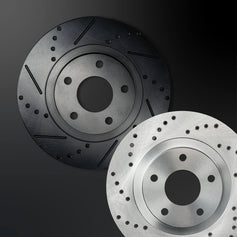
Premium coatings like GEOMET are tested to withstand 480 hours of salt spray exposure before corrosion appears, well beyond the 300-hour industry baseline. These coatings protect the hat, edges, and internal cooling vanes, the exact areas your brake pads never touch and can't clean.
Choose Galvanized Brake Pad Backing Plates
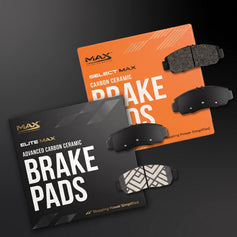
Zinc-galvanized backing plates act as a sacrificial anode. The zinc corrodes slowly to protect the underlying steel, eliminating the risk of rust jacking. It's a straightforward material upgrade that prevents one of the most dangerous brake failure modes.
Wash Your Wheels Regularly Through Winter
Hosing down your wheel wells and undercarriage regularly can extend component life by up to three times, according to service industry data. It's free, it takes five minutes, and it's one of the highest-impact habits you can build during winter months.
Do a Post-Winter Brake Inspection
After winter ends, check for these warning signs:
- Uneven pad wear (indicates seized calipers)
- Vibration after the car has been parked (surface corrosion on rotors)
- Spongy pedal feel (possible brake line corrosion)
- Visible rust on rotor edges and hats (coating failure or uncoated rotors)
A Note for EV and Hybrid Drivers
Regenerative braking means your friction brakes get used far less often. That sounds like a benefit, but it means your rotors sit exposed to salt and moisture without the self-cleaning effect of regular pad contact. Coated rotors are especially important if you drive an EV or hybrid through Canadian winters.
A Practical Next Step
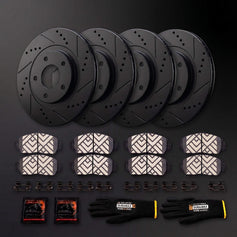
At Max Advanced Brakes, our vehicle-specific brake kits include coated rotors and galvanized pad backing plates. Every kit comes with a 100% fitment guarantee (matched to OEM weight and vane counts), free shipping to Canadian addresses, and no tariff or duty fees. Use our vehicle search tool to find the right kit for your car before next winter.
Don't Wait Until Your Brakes Tell You Something Is Wrong
Brake line corrosion and clogged cooling vanes fail silently. There is no warning squeal, no dashboard light. By the time you notice a problem, you may already be dealing with reduced stopping power or complete brake failure.
NHTSA data shows the risk spikes sharply after seven to eight years of salt exposure. If you drive a 2018 or older vehicle in Ontario, Quebec, or anywhere in the GTA corridor, now is the time to inspect.
Check your brakes this fall, choose corrosion-resistant components, and use our vehicle-specific search tool to find the right brake kit for your car. Prevention is always cheaper than repair, and far safer than finding out the hard way.





)