

Why Canadian Winters Are Harder on Brakes Than You Think
If you've ever wondered why your brakes seem to wear out faster than the owner's manual suggests, you're not imagining things. Canadian drivers often need to replace their brakes 20–30% sooner than manufacturer estimates, and road salt is the primary culprit.
Ontario alone uses 3–5 million tonnes of road salt every winter. Sodium chloride acts as an electrolyte on cast iron rotors, dramatically accelerating oxidation and corrosion. Vehicles in Ontario and Quebec face the highest rust risk in Canada, thanks to heavy salt application, constant freeze-thaw cycles, and dense stop-and-go urban traffic.
Most manufacturer-recommended mileage intervals are written for mild-climate or US driving conditions. They don't account for five or six months of salt, slush, and ice. This guide is built specifically for Canadian drivers: a practical, locally relevant breakdown of when your brakes actually need attention, not when a generic schedule says they should.
The Warning Signs Your Brake Pads Are Worn
The Engineered Squeal
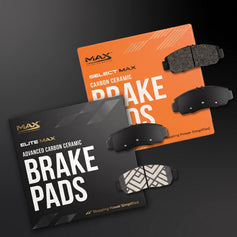
Every quality brake pad contains a small metal shim called a wear indicator. When the friction material wears thin enough, this shim contacts the rotor and produces a deliberate high-pitched squeal. This isn't a random noise. It's an engineered warning system that gives you roughly 1,000–2,000 miles of driving before replacement becomes critical.
Do not ignore that squeal. It's your brakes telling you exactly what they need.
Thickness Matters
New brake pads measure between 10–12 mm thick. Replacement is recommended once the friction material wears down to 3–4 mm, and it becomes urgent at 2 mm or less. Ontario's Safety Standards Certificate (SSC) sets the legal minimum at 1.6 mm of pad thickness, but most licensed technicians recommend replacing at 3 mm for a real-world safety margin. Waiting until you're at the legal minimum leaves almost no room for error, especially on wet or icy roads.
Other Signs to Watch For
- Grinding or metal-on-metal sound: The pad is fully worn through and is now scoring the rotor surface. Damage is already happening.
- Longer stopping distances: If your car takes noticeably more road to come to a full stop, worn pads are a likely cause.
- A soft or spongy brake pedal: This can point to worn pads, but it may also indicate degraded brake fluid or air in the brake lines.
Keep in mind that front pads wear faster than rear pads. Fronts typically need replacement around 40,000–50,000 miles, while rears last about 20–30% longer. Your front brakes handle the majority of stopping force during braking, especially under hard stops.
How to Do a Quick Visual Brake Inspection at Home
You don't always need to remove a wheel to check your brake pads. On many vehicles, you can look through the wheel spokes and see the pad pressed against the rotor. If the visible friction material is thinner than the edge of a quarter (roughly 3 mm), schedule an inspection or replacement.
Listen while you drive. A squeal when you press the brake pedal means the wear indicator is active. A grinding noise means metal is already contacting metal, and you're past the warning stage.
Feel your brake pedal. If it sinks lower than usual or feels spongy underfoot, that can signal worn pads, low brake fluid, or fluid that has absorbed too much moisture. Brake fluid is hygroscopic, meaning it pulls moisture from the air over time. This lowers its boiling point and reduces braking performance. Most technicians recommend replacing brake fluid every 2–3 years, or roughly every 48,000 km, regardless of pad condition.
Also check for brake dust accumulation inside the wheel. While some dust is normal, excessive buildup can signal that your pads are wearing faster than expected and deserve closer attention.
Reading Your Rotors: Surface Rust vs. Dangerous Corrosion
If you've ever walked out to your car on a damp Canadian morning and noticed orange rust on your rotors, don't panic. Surface rust after rain or overnight parking is completely normal. It clears within the first few brake applications and poses no safety concern. Canadian drivers see this almost every winter morning.
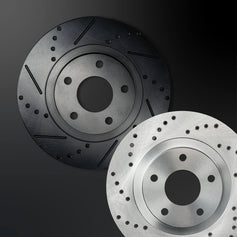
Deep pitting from prolonged salt exposure is a different situation entirely. This is structural corrosion that weakens the rotor from within and cannot be cleared by normal driving. If you can feel grooves or rough patches with your fingernail, the rotor needs professional inspection.
Ontario safety inspection standards require that rotor surface grooves be no deeper than 1.5 mm. Rotors must also meet the minimum thickness stamped on them by the manufacturer. Rotors that fall below either threshold need machining or full replacement.
Vibration felt only while braking (not during normal cruising) is a strong indicator of warped or unevenly worn rotors. Many drivers mistake this for an alignment problem, but if the vibration disappears when you release the brake pedal, the rotors are the likely cause.
Rotors typically last 50,000–80,000 miles, but they're almost always replaced alongside brake pads when old pads wore down to metal and scored the rotor surface. Replacing pads without addressing scored rotors shortens the life of your new pads significantly and can cause uneven braking.
When to Schedule Your Brake Inspection: A Canadian Seasonal Guide
Toyota Canada recommends brake system inspections every 8,000 km or every 6 months, whichever comes first. NAPA Canada suggests assessing your brakes and rotors roughly every 16,000 km, even if nothing seems wrong. Both are solid benchmarks for Canadian drivers.
If you only do one brake check per year, make it a post-winter inspection in April or May. After five to six months of salt, slush, and freeze-thaw exposure, your caliper hardware, brake lines, and rotor surfaces all need a thorough look. This is the single most important brake check of the year for Canadian vehicles.
A pre-winter check in October is equally valuable. Heading into a Canadian winter with marginal pads is a genuine safety risk. Wet roads, ice, and reduced visibility already shrink your margin for error. Starting the season with fresh, reliable brakes makes a real difference.
If you drive a heavy SUV or truck, a large segment of Canadian drivers, inspect more frequently. Added vehicle weight accelerates brake wear, and towing or hauling shortens replacement intervals even further.
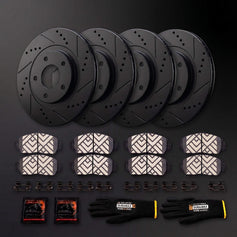
This is where Max Advanced Brakes' vehicle-specific search tool becomes a practical resource. Before heading into a seasonal inspection or tackling a DIY replacement, you can find OEM-spec brake kits matched exactly to your vehicle, with the correct weight and vane counts for guaranteed fitment.
What Happens If You Wait Too Long
Ignoring worn brake pads doesn't just mean a noisier drive. Once pads wear through completely, metal contacts metal, scoring the rotor surface. What could have been a straightforward pad swap now escalates into needing new rotors, potentially new calipers, and a brake fluid flush.
The costs add up fast. Brake replacement in Canada ranges from $350–$600 CAD per axle for compact cars, up to $700–$1,200 CAD for trucks and luxury vehicles (parts and labour combined). DIY replacement brings that down to roughly $200–$500 CAD per axle in parts alone, cutting costs roughly in half compared to shop labour rates of $90–$200 CAD per hour.
The safety case is equally clear. Between 2011 and 2020, approximately 5% of Canadian traffic fatalities involved a vehicle issue such as faulty brakes or tires as a contributing factor. In wet or icy conditions, compromised brakes make vehicle control significantly harder when the margin for error is already thin.
Catching brake wear early is always cheaper and safer than reacting to a failure. A pad replacement is a fraction of the cost of a full brake system repair.
Replace Your Brakes with Confidence
Here are the signals Canadian drivers should never ignore: the engineered wear indicator squeal, pad thickness below 3–4 mm, rotor pitting or deep scoring, vibration under braking, and a spongy pedal.
Build a seasonal rhythm into your maintenance routine. Do a post-winter inspection in spring, a pre-winter check in fall, and a quick visual check every 8,000–16,000 km in between. Acting early protects both your safety and your wallet.
At Max Advanced Brakes, finding the right parts is straightforward. Use our vehicle-specific search tool to find brake kits built to OEM specs for your exact vehicle. Every order ships free from our Canadian and US warehouses with no tariff or duty fees, and every kit is backed by our 100% fitment guarantee, comprehensive warranty, and 90-day extended returns. Knowing what to look for puts you in control of your vehicle's safety. We're here to make sure you have the right parts when you need them.