

By: Max Advanced Brakes
The Regenerative Braking Trade-Off Canadian Drivers Need to Understand
Regenerative braking is straightforward: when you lift off the accelerator in an EV or hybrid, the electric motor reverses its role and acts as a generator. Instead of converting electrical energy into motion, it converts your vehicle's kinetic energy back into battery charge. The vehicle slows down without relying heavily on the friction brakes.
This system reduces friction brake wear by 64% to 95% compared to gas-powered vehicles. That's why EV brake pads routinely last 70,000 to 100,000+ miles, while gas car pads typically need replacing between 30,000 and 50,000 miles.
Hybrids are a different story. Because they have smaller batteries and less powerful electric motors, hybrids engage their friction brakes more often, especially at low speeds. Their pads still outlast gas cars (lasting 80,000 to 100,000 miles), and the more frequent friction contact keeps their rotors cleaner.
Here's the counterintuitive part: less friction brake use means less heat, and less heat means rotors never get scrubbed clean of moisture and debris. That sets up a corrosion problem that catches many EV owners off guard.
The Corrosion Paradox: Why Your Rotors May Fail Before Your Pads
EV brake pads last two to three times longer than gas car pads. That sounds like pure upside, until you look at what's happening to the rotors. Because the friction brakes engage so rarely, the pads never scrub moisture and surface rust off the rotor face. Over time, that rust builds up and can compromise braking performance.
Rear rotors are the worst offenders. Most regenerative braking systems prioritize front-wheel energy recovery, which means rear brakes sit almost entirely unused for thousands of kilometres. Without regular heat cycles, moisture and road contaminants stay on those rear brake components, accelerating rust formation and eventually leading to seized calipers.
For Canadian drivers, road salt makes this problem significantly worse. Over 5 million tonnes of road salt are applied to Canadian roads every year. Provinces like Ontario, Quebec, New Brunswick, Nova Scotia, and PEI are the highest-risk zones for brake corrosion. Salt accelerates oxidation on metal surfaces, and when your friction brakes aren't generating enough heat to dry things out, that salt sits there doing damage.
Manufacturers are taking notice. Tesla and BMW now recommend periodic "brake conditioning" drives, where you deliberately apply the brakes firmly at moderate speeds to scrub rust off the rotors and prevent caliper seizure. This is an entirely new maintenance habit for EV owners.
The cost of ignoring this is real. An annual brake cleaning and corrosion inspection runs $80 to $150 CAD. Skip it, and you could be looking at $500+ CAD for rotor replacements or $400 to $800 CAD per caliper if they seize.
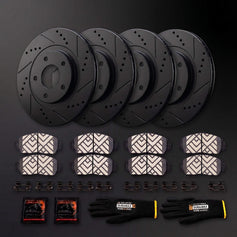
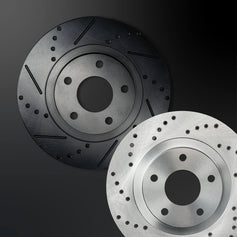
Coated rotors are particularly beneficial for Canadian EV and hybrid owners. The protective coating resists surface rust during long stretches of low friction brake use. Our OEM-spec coated rotor options are built for exactly this scenario, giving you vehicle-specific protection that matches your car's original specifications, including correct weight and vane counts.
Cold Weather and Road Salt: Canada's Unique EV Brake Challenge
Many EV owners don't expect this: regenerative braking is reduced or completely disabled when the battery is very cold, very full, or overheated. During a Canadian winter, cold starts mean your battery often can't accept a full regenerative charge. Your vehicle falls back on friction brakes more than you'd expect, especially in the first several minutes of driving.
This creates uneven wear cycles across seasons. Your friction brakes may see heavy use in January and almost none in July, which complicates standard replacement intervals and makes regular inspections more important than mileage alone would suggest.
The road salt factor compounds things further. Because EV and hybrid friction brakes stay cold and engage less frequently, salt and moisture linger on brake components far longer than they would on a gas vehicle. Freeze-thaw cycles work that salt into every crevice, accelerating corrosion on rotors, caliper slides, and hardware.
Tesla specifically recommends annual brake inspection, cleaning, and lubrication for Canadian owners. This isn't optional maintenance; it's a direct response to the conditions our roads create.
One more thing many EV owners overlook: brake fluid still needs to be flushed approximately every 30,000 km or every 3 to 4 years, regardless of how little your friction brakes are used. Brake fluid absorbs moisture over time, and moisture-contaminated fluid can boil at lower temperatures or corrode internal brake components. Assuming low brake use means low maintenance is a safety risk.
A Note for DIY Installers: Pad Burnishing on EVs Is Different
Brake pads on EVs can vitrify, meaning they harden from prolonged disuse. When pads vitrify, their surface becomes glazed and loses its ability to grip the rotor effectively, reducing braking efficiency and causing noise and vibration.
When you install new brake pads on an EV or hybrid, those pads may never properly seat through normal driving. Regenerative braking limits the natural heat-and-friction bedding process that gas cars provide automatically. Without proper burnishing, you won't get full braking performance from your new pads.
Some vehicles offer a service mode that disables regenerative braking temporarily, allowing you to perform a deliberate bedding-in procedure. If your vehicle doesn't have this feature, follow a manual burnishing sequence: a series of moderate stops from 50 to 60 km/h with cooling intervals between each application. This is a solvable problem with the right approach, not a reason to avoid doing your own brake work.
What This Means for Your Brake Maintenance Schedule
For Canadian EV and hybrid owners, the maintenance equation differs from a gas car. Pads last longer, but rotors and calipers need more frequent attention for corrosion. Here's a simple checklist:
- Annual brake inspection and lubrication (caliper slides, hardware, and rotor surfaces)
- Brake fluid flush every 30,000 km or every 3 to 4 years
- Periodic brake conditioning drives to scrub rust and keep calipers moving freely
- Visual rotor inspection after winter, especially if you drive in salt-belt provinces
If you drive a hybrid (HEV or PHEV), don't assume your brake maintenance mirrors a full BEV. Hybrids use friction brakes more often, which keeps rotors cleaner, but corrosion vigilance is still essential in Ontario, Quebec, and the Maritimes.
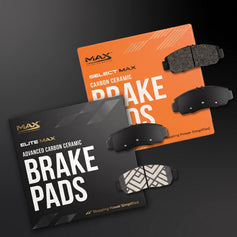
Understanding how your vehicle's braking system actually works puts you in control of your maintenance. When it's time to replace pads or rotors, using OEM-spec, vehicle-specific parts ensures correct fitment and full braking performance from the first stop. Use our vehicle search tool to find the right brake kit for your EV or hybrid, backed by our 100% fitment guarantee and free shipping across Canada.