

By: Max Advanced Brakes
Why Vehicle Age Changes Everything About Brake Replacement
The average light vehicle on U.S. roads hit a record 12.8 years old in 2025, up from just 9.6 years in 2002. In Canada, the average sits around 10 to 11 years and continues to climb. These are not just statistics; they reshape how you should approach every brake job.
A 12-year-old vehicle with 60,000 km on it often needs more urgent brake attention than a 6-year-old vehicle with 90,000 highway kilometres. That is because time-based degradation (rubber hose cracking, seal hardening, brake fluid absorbing moisture) happens independently of how far you drive. A pads-only approach on an aging vehicle is a false economy that can destroy new parts within weeks.
Start Here: Brake Fluid and Lines Before You Touch the Pads
Brake fluid is hygroscopic, meaning it absorbs moisture from the air over time. As water content rises, the fluid's boiling point drops. The result is a spongy or soft brake pedal that gets frequently misdiagnosed as a mechanical failure. In many cases, the fix is not a new caliper or bleeding the lines. It is replacing the fluid itself.
DOT 3, DOT 4, and DOT 5.1 fluids should be replaced every two to three years regardless of mileage. Skip this interval and contaminated fluid can clog ABS modulators, proportioning valves, and caliper pistons, turning a simple fluid flush into a much larger repair.
Steel brake lines deserve equal attention. They are highly vulnerable to road salt and moisture. Heavy flaking or bubbling rust on the outside of a brake line signals structural failure that can lead to leaks or blowouts under pressure. For Canadian drivers dealing with salted winter roads, this corrosion is accelerated significantly. On some vehicles in salt-heavy regions, line failure has been reported in as few as five or six years.
The key takeaway: test fluid condition and visually inspect all lines before you order any other parts. This single step can completely change the scope of the job.
Calipers and Brake Hoses: The Hidden Aging Components
Brake calipers on daily-driven vehicles in northern salt-belt regions commonly start showing problems (corrosion, sticking, leaking) after 75,000 to 120,000 km. On an older vehicle that has spent years exposed to road salt, caliper issues can appear well before those mileage thresholds.
Sticking calipers are one of the most common culprits. When debris or corrosion builds up on guide pins, the caliper cannot fully release after braking. That keeps the pads constantly pressed against the rotor, causing excessive wear and overheating, and you will burn through a brand-new set of pads in a fraction of their expected life.
Flexible rubber brake hoses are another overlooked failure point. Over time, they crack and harden, creating internal restrictions that trap pressure. This mimics a sticking caliper even after a full brake job is complete. Caliper piston seals also harden with age regardless of mileage, and degraded fluid accelerates seal failure, which leads to piston seizure.
On any vehicle over 8 to 10 years old, inspect guide pins, caliper boots, and flexible hoses before assuming pads and rotors are the primary issue.
Rotors, Pads, and the False Economy of Partial Replacement
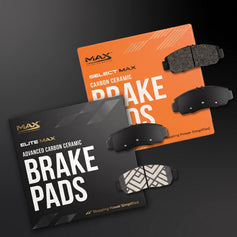
Installing new brake pads on grooved, uneven, or near-minimum-thickness rotors is one of the most common and costly mistakes on older vehicles. The result is noise, poor braking performance, and accelerated pad wear. You end up paying twice for what should have been done once.
Rotors should always be replaced in pairs on the same axle to maintain balanced braking and even pad wear. Most brake pads start at 10 to 12 mm of friction material. At 4 mm, replacement is needed soon. At 3 mm or less, it is urgent, and you risk scoring the rotors beyond recovery.
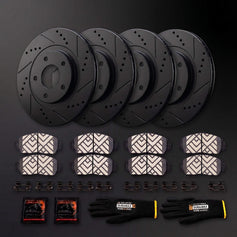
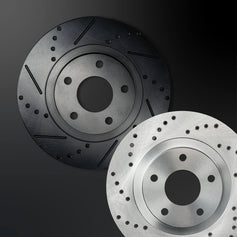
Canadian winters create a specific problem: rust ring formation around the outer edge and hub of rotors. This corrosion leads to uneven pad contact and persistent noise. Coated rotors are strongly recommended for Canadian drivers because they resist salt-driven corrosion far better than bare cast iron.
Do not overlook brake hardware. Clips, shims, and slide pins should be replaced during any brake job on an older vehicle. Worn hardware is a common source of rattling, squealing, and uneven wear that most DIY guides skip entirely. Our vehicle-specific search tool helps you confirm exact OEM-spec fitment, including rotor weight and vane counts, so every new component works correctly together on your older platform.
Build Your Inspection Order Before You Buy a Single Part
For aging vehicles, the order you inspect matters as much as what you inspect. Here is the sequence we recommend:
- Test brake fluid condition (moisture content and colour)
- Inspect steel brake lines and flexible hoses for corrosion, cracking, or swelling
- Check caliper function and guide pin movement
- Measure rotor thickness and evaluate surface condition
- Check pad thickness last
This order prevents the frustrating scenario where you replace pads and rotors, only to discover a sticking caliper or failing brake line destroys the new parts within weeks. It saves money and avoids repeat trips under the car.
If your ABS warning light is on, address it before completing any brake work. Older ABS systems can suffer from faulty sensors or worn hydraulic units that cause unpredictable braking behaviour. Completing a brake job without resolving an active ABS fault can mask serious problems.
Treating brake replacement as a system job, not a parts swap, is the single biggest shift in strategy that aging vehicles demand.
The Right Strategy Keeps Older Vehicles Stopping Safely
The core shift is straightforward: aging vehicles require both a time-based and mileage-based inspection approach, starting with fluid and lines rather than pads. A full system inspection protects your investment in new parts and prevents repeat repairs.
For Canadian DIYers, factor in road salt acceleration when setting your inspection and replacement intervals. Your brake components age faster than the owner's manual suggests.
With the right inspection order and quality, vehicle-specific parts, an older vehicle can stop just as reliably as a newer one. Use our vehicle search tool to find the exact brake kit for your car, backed by our 100% fitment guarantee, free shipping across Canada, and a 90-day return policy.